Previous Matches
Immanuel Kant
1724–1804
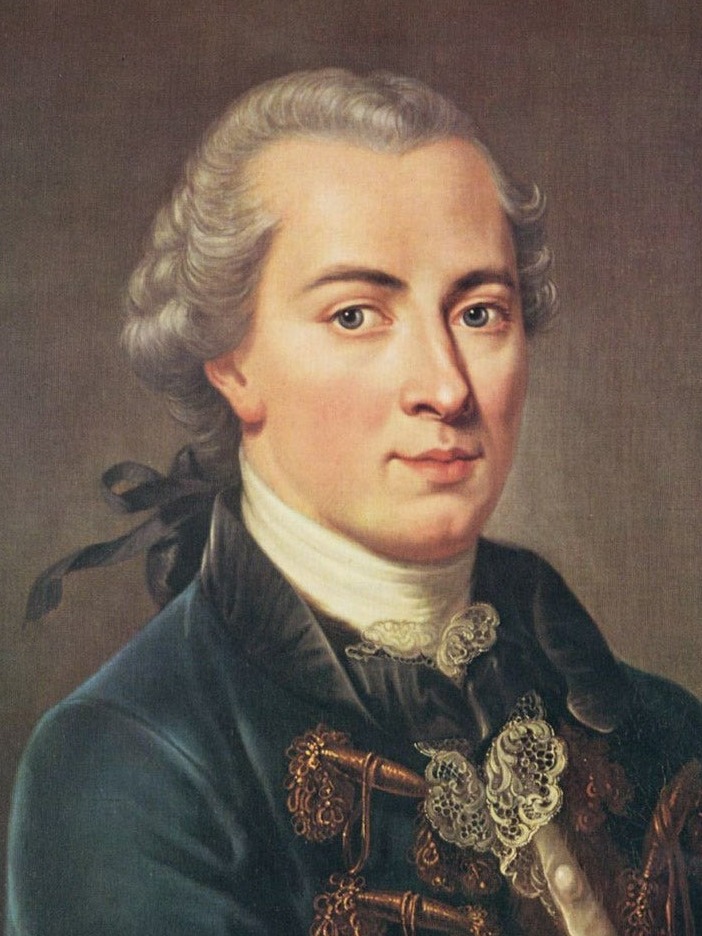
- Lived
- 1724–1804
- Place
- Königsberg
- Teacher
- Martin Knutzen
- Principal move
- Changing the relations
In the third paragraph
Kant spent his life in Königsberg, in Prussia. He began as a follower of the rationalist philosophy of Leibniz and Wolff, until, as he later said, David Hume woke him from his “dogmatic slumber.” The Critique of Pure Reason (1781) changed the course of European philosophy.
The limits of reason. Knowledge requires material given in experience and concepts that organize it. Reason goes wrong when it uses its concepts beyond any possible experience and claims to know about God, the soul, or the universe as a whole.
Appearances and things in themselves. We know the world only as it appears to us, structured by space, time and the mind’s own concepts. What things are in themselves lies beyond our knowledge.
The failed proofs of God. Kant concludes that the ontological, cosmological and design arguments all fail.
Making room for faith. Kant was not an atheist. He says he had to deny knowledge in order to make room for faith, and in the Critique of Practical Reason (1788), God is something moral life requires us to assume, although we cannot know it.
Where they appear
The Game · Metaphysics: What is there, and what for? · Ethics: What do I do now? · Descartes · 1. Religion and philosophy · 3. Ghazali, Kant and the limits of thought · 4. Muslims and modern knowledge · 7. The Quran’s picture of the universe
Built by Umair Malik while studying Iqbal · Your Commentator