Previous Matches
Ibn Rushd
Averroes, 1126–1198
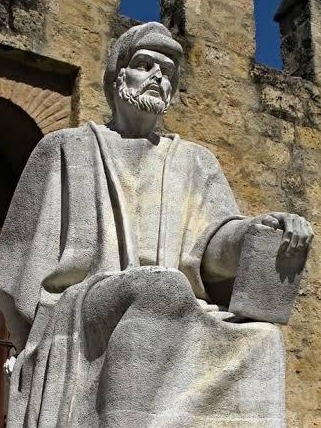
- Lived
- 1126–1198
- Place
- Córdoba and Marrakesh
Portrait: a later depiction
In the second paragraph
Born in Córdoba, in Muslim Spain, Ibn Rushd served as a judge and court physician and wrote commentaries on nearly all of Aristotle’s works. Medieval Latin writers called him simply “the Commentator.” He was born after Ghazali died, so they opposed each other through their books.
The reply to Ghazali. The Incoherence of the Incoherence answers Ghazali point by point, arguing that he had attacked a distorted version of philosophy.
Philosophy as a religious duty. The Decisive Treatise argues that the Quran commands reflection on creation, so those capable of philosophy are obliged to pursue it.
The unity of the intellect. Aristotle’s De Anima briefly describes an active intellect, which alone is immortal. Ibn Rushd developed this into his most controversial view: intellect is single and shared by all human beings, so what is eternal in human thought does not belong to any one person.
Influence in Europe. Latin Averroists taught his ideas at Paris, and the tradition later flourished at Padua. Thomas Aquinas wrote against the doctrine in 1270, and the Bishop of Paris condemned related teachings in 1270 and 1277.
Where they appear
2. The search for rational foundations
Built by Umair Malik while studying Iqbal · Your Commentator