Chapter I · The First Paragraph
1. Religion and philosophy
Book pages 3–5
The first paragraph (pages 3–5) asks whether reason can examine religion without losing what makes it religion.
The People
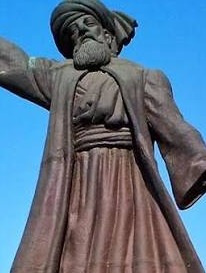
Rumi (1207–1273)
Born in the region of Balkh, Rumi settled in Konya, in Anatolia, as a jurist and preacher. His meeting with the mystic Shams of Tabriz in 1244 turned him into a poet of divine love, and he wrote the Masnavi and the Divan-e Shams. He is the unnamed “great mystic poet of Islam” on page 4. He is studied mainly in Persian literature and Sufism, and he is not a philosopher in the strict sense, because he built no systematic argument.
The ladder he inherited. Greek thought left a picture of reality as a ladder. Aristotle contributed a highest being and a scale running from pure actuality down to changing matter. Plato contributed the idea that the soul must climb back up. Plotinus joined the two, picturing all things flowing from the One and longing to return. This picture reached Rumi indirectly, through Islamic philosophy and earlier Sufism, alongside the Quran’s own theme of return to God.
Love as the upward pull. Aristotle said the highest being moves the heavens as an object of love. Rumi says the heavens turn on waves of love, but his God loves in return. Love is broader than intuition: it is the force that draws a person toward God and opens the heart to knowing. His closest word for that knowing is dhawq, or “tasting.”
Two kinds of intellect. The Masnavi describes one intellect acquired like a boy at school, and another that is God’s gift, a spring within the soul. When Rumi attacks intellect, he usually means the first.
What it does
| Senses | Perceive the physical world |
| Partial intellect (‘aql-i juz’i) | Calculates and reasons from what the senses provide |
| Universal intellect (‘aql-i kull) | Stands high in the order of reality, close to God |
| Love and the heart | Carry the seeker past what reasoning can reach |
Thought sees only parts. In the Masnavi, people feel an elephant in a dark room. One touches the ear and calls it a fan, and another touches the leg and calls it a pillar. With a candle, their disagreement would disappear.
The ladder in two pictures
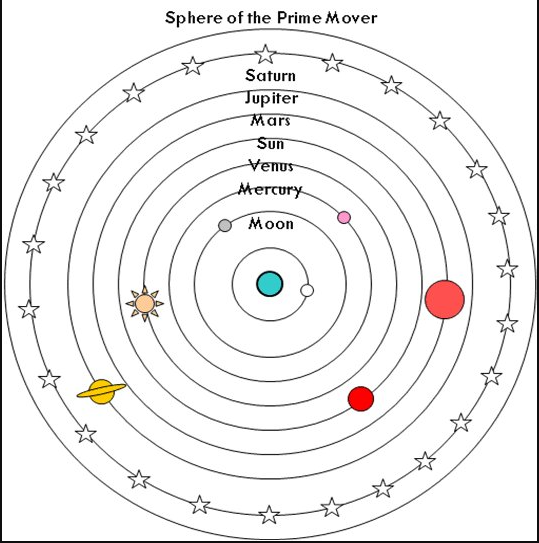
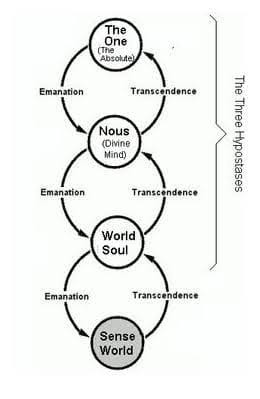
| Aristotle’s cosmos. Earth at the center, surrounded by | Neoplatonism. Reality flows down by emanation |
| nested spheres. | and rises again. |
Reading Aristotle’s cosmos. Below the Moon, the four elements change, and things are born and die. Above it, the heavens are made of ether and only move in circles. The Unmoved Mover causes that motion by being desired. The picture labels an outer sphere for it, but for Aristotle the Mover itself has no matter and no place. This is a ranking of motion, and nothing flows out of the Mover.
Reading Neoplatonism. Plotinus turned Aristotle’s ladder into a flow. He placed the One above everything and demoted Aristotle’s thinking God to the second level, Nous. Each level comes from the one above it, and the sense world is the farthest from the source. The upward arrows are the return, and this is the journey that Sufi writers describe as driven by love.
Why this matters. On both pictures, the changing world sits at the bottom. Iqbal’s claim that the Quran is “anti-classical” challenges exactly that, because it treats change in nature as worthy of attention.
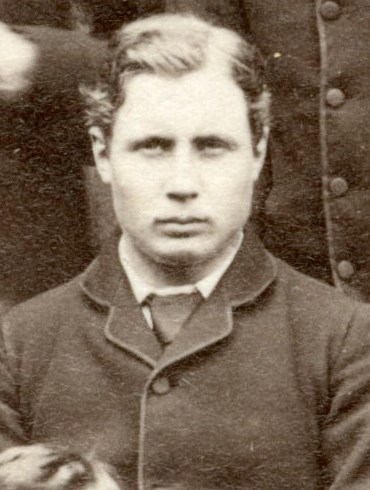
Alfred North Whitehead (1861–1947)
An English mathematician who spent the first part of his career at Cambridge, where Bertrand Russell was his student. Together they wrote Principia Mathematica (1910–13), which tried to derive mathematics from logic. In 1924, at the age of 63, he moved to Harvard to teach philosophy, and there he wrote his major books on science, religion and metaphysics.
Religion as transforming truth. In Religion in the Making (1926), Whitehead defines a religion, on its doctrinal side, as a system of general truths that transform character when they are sincerely held and vividly apprehended. The definition joins two things often kept apart: religion makes claims that can be true or false, and those claims are meant to change the person who holds them. He also treats rational reflection as one of religion’s own stages of development, along with ritual, emotion and belief.
Science and its unexamined faith. In Science and the Modern World (1925), he argues that modern science began as a revolt against the rigid rationalism of the Middle Ages, and that it “has remained predominantly an anti-rationalistic movement, based upon a naive faith.” Science assumes that nature is orderly, but it does not justify that assumption.
Speculative philosophy. In Process and Reality (1929), he describes philosophy as “the endeavour to frame a coherent, logical, necessary system of general ideas in terms of which every element of our experience can be interpreted.” The important word is every: a philosophy that explains away religious experience has failed by this standard.
Misplaced concreteness. Whitehead warns against treating an abstraction as if it were the concrete reality it was drawn from. A map of a city is useful, but no one lives on the map.
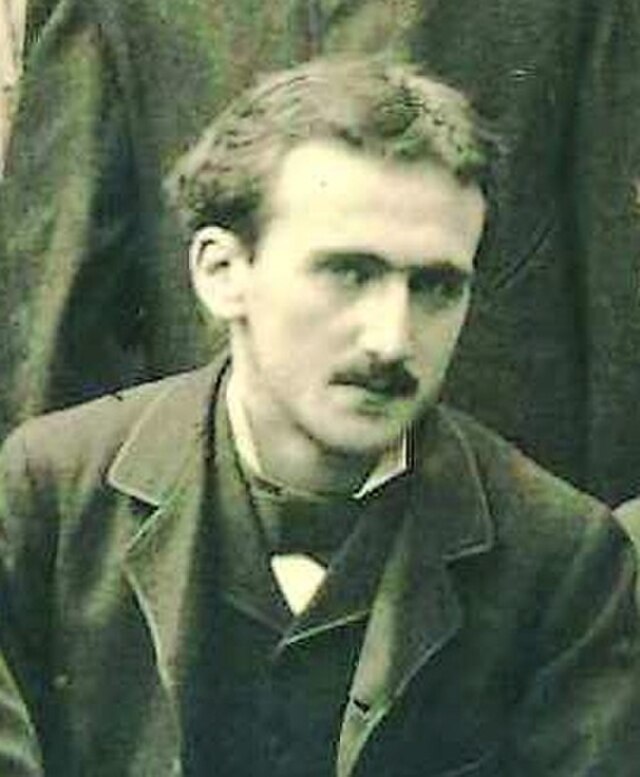
Henri Bergson (1859–1941)
A French philosopher who taught at the Collège de France from 1900. Creative Evolution (1907) made him internationally famous, and he received the Nobel Prize in Literature in 1927. In the early twentieth century, he was the leading voice arguing that the intellect alone cannot grasp life.
Intellect: knowing by cutting up. For Bergson, the intellect evolved to help living things act, so it treats the world as separate, stable objects. He compares it to a film camera, which turns continuous movement into a series of still frames. The movement itself is never captured in any frame.
Intuition: knowing from within. In An Introduction to Metaphysics (1903), he describes intuition as the sympathy by which one enters into a thing “in order to coincide with what is unique in it.” Reading every description of a city is one kind of knowledge, and living there is another. Intuition is a disciplined effort to know in the second way.
Duration: time as it is lived. Bergson distinguishes clock time, which divides into equal units, from durée, the unbroken flow of lived experience. In a melody, each note is heard in connection with those before it. For Bergson, intuition is above all the grasp of this flow.
One root, two directions. In Creative Evolution, life is a single creative impulse, the élan vital, which branched in different directions. Instinct and intelligence developed along separate branches from that common source, and intuition is instinct that has become self-aware. It needs the intellect, because “there are things that intelligence alone is able to seek, but which, by itself, it will never find.”
The Ideas
Ultimate Reality. Whatever is most fundamentally real, on which everything else depends. In religious terms, this is God. The capital R in “Reality” signals this sense of the word.
The incapacity of pure reason (page 4). An allusion to Immanuel Kant’s Critique of Pure Reason (1781), which argues that reason cannot gain knowledge of what lies beyond possible experience, including God.
Scholastics and mystics (page 4). Two rival routes to religious truth. Scholastics work through reasoned argument, as the Christian theologians of medieval Europe and the mutakallimun of Islam did. Mystics, such as the Sufis, seek direct experience of God.
Cognitive content (page 4). To say faith has cognitive content is to say it makes claims about how things are, claims that can be true or false.
Rational metaphysics (page 4). A reasoned account of what reality ultimately is.
Reflective synthesis (page 5). Philosophy’s effort to bring all kinds of experience together into one coherent account. To call religion “focal” in this synthesis is to place it at the center.
Intuition (page 5). Direct knowing of Reality, not a hunch or a guess. It is the key term of this chapter, which goes on to connect it with the “heart.”
A trap in the closing comparison
Three sentences compare thought and intuition using “the one” and “the other,” and the references switch partway through.
| Sentence on page 5 | “The one” | “The other” |
| “The one grasps Reality piecemeal...” | Thought | Intuition |
| “The one fixes its gaze on the eternal...” | Intuition | Thought |
| “The one is present enjoyment...” | Intuition | Thought |
Iqbal’s text
Read the paragraph now. The small numbers in the margin are the book’s page numbers.
3What is the character and general structure of the universe in which we live? Is there a permanent element in the constitution of this universe? How are we related to it? What place do we occupy in it, and what is the kind of conduct that befits the place we occupy? These questions are common to religion, philosophy, and higher poetry.
But the kind of knowledge that poetic inspiration brings is essentially individual in its character; it is figurative, vague, and indefinite. Religion, in its more advanced forms, rises higher than poetry. It moves from individual to society. In its attitude towards the ultimate reality it is opposed to the limitations of man; it enlarges his claims and holds out the prospect of nothing less than a direct vision of Reality.
Is it then possible to apply the purely rational method of philosophy to religion? The spirit of philosophy is one of free inquiry. It suspects all authority. Its function is to trace 4the uncritical assumptions of human thought to their hiding places, and in this pursuit it may finally end in denial or a frank admission of the incapacity of pure reason to reach the ultimate reality. The essence of religion, on the other hand, is faith; and faith, like the bird, sees its 'trackless way' unattended by intellect which, in the words of the great mystic poet of Islam,
'only waylays the living heart of man and robs it of the invisible wealth of life that lies within'.
Yet it cannot be denied that faith is more than mere feeling. It has something like a cognitive content, and the existence of rival parties — scholastics and mystics — in the history of religion shows that idea is a vital element in religion. Apart from this, religion on its doctrinal side, as defined by Professor Whitehead, is 'a system of general truths which have the effect of transforming character when they are sincerely held and vividly apprehended'. Now, since the transformation and guidance of man's inner and outer life is the essential aim of religion, it is obvious that the general truths which it embodies must not remain unsettled. No one would hazard action on the basis of a doubtful principle of conduct. Indeed, in view of its function, religion stands in greater need of a rational foundation of its ultimate principles than even the dogmas of science. Science may ignore a rational metaphysics; indeed, it has ignored it so far. Religion can hardly afford to ignore the search for a reconciliation of the oppositions of experience and a justification of the environment in which humanity finds itself.
That is why Professor Whitehead has acutely remarked that 'the ages of faith are the ages of rationalism'. But to rationalize faith is not to admit the superiority of philosophy over religion. Philosophy, no doubt, has jurisdiction to judge religion, but what is to be judged is of such a nature that it will not submit to the jurisdiction of philosophy except 5on its own terms. While sitting in judgement on religion, philosophy cannot give religion an inferior place among its data. Religion is not a departmental affair; it is neither mere thought, nor mere feeling, nor mere action; it is an expression of the whole man. Thus, in the evaluation of religion, philosophy must recognize the central position of religion and has no other alternative but to admit it as something focal in the process of reflective synthesis. Nor is there any reason to suppose that thought and intuition are essentially opposed to each other. They spring up from the same root and complement each other. The one grasps Reality piecemeal, the other grasps it in its wholeness. The one fixes its gaze on the eternal, the other on the temporal aspect of Reality. The one is present enjoyment of the whole of Reality; the other aims at traversing the whole by slowly specifying and closing up the various regions of the whole for exclusive observation. Both are in need of each other for mutual rejuvenation. Both seek visions of the same Reality which reveals itself to them in accordance with their function in life. In fact, intuition, as Bergson rightly says, is only a higher kind of intellect.
How Iqbal Uses Them
He sets up the separation. Religion, philosophy and higher poetry ask the same questions about the universe and our place in it. Iqbal sets poetry aside as individual and vague, which leaves religion and philosophy facing each other. Each seems to have grounds for walking away. From reason’s side, philosophy suspects all authority and may end by conceding, with Kant, that reason cannot reach Ultimate Reality. From faith’s side, Rumi says intellect only robs the heart.
Whitehead closes the gap from religion’s side. The dispute between scholastics and mystics shows that ideas matter to religion, so faith has cognitive content. Whitehead’s definition then supplies the decisive step. If religion consists of truths meant to transform character, those truths must be settled, because no one stakes their conduct on a doubtful principle. Iqbal concludes that religion needs rational foundations even more than science does, since science has managed without a metaphysics. His second Whitehead quotation, that the ages of faith are the ages of rationalism, adds that history does not make the two enemies. It helps that the witness for faith’s rationality is one of the great logicians.
He then limits philosophy’s authority. Rationalizing faith does not make philosophy superior to religion. Philosophy may judge religion, but only on religion’s terms, because religion is an expression of the whole person. Iqbal’s demand that the “reflective synthesis” place religion at its center closely resembles Whitehead’s ideal of a philosophy that interprets every element of experience.
Bergson closes the gap from knowledge’s side. Iqbal borrows Bergson’s contrast: thought takes Reality piece by piece, and intuition takes it whole. He also borrows the idea of a shared origin, so the two can be complementary. He adapts Bergson in two ways. He assigns intuition to the eternal and thought to the temporal, while Bergson’s intuition is directed at time itself. And by calling intuition “only a higher kind of intellect,” he stresses kinship where Bergson more often stresses contrast. Both adjustments serve his purpose, which is to treat religious intuition as a form of knowing.
Rumi’s line is narrower than it sounds. On page 4, Rumi speaks for faith against intellect, but his target is the partial intellect, so the line does not contradict the conclusion on page 5. His second intellect also resembles the “higher kind of intellect” with which the paragraph ends. Iqbal parts from him in two ways: Rumi’s love tends toward the dissolving of the self, while Iqbal wants the self to grow stronger, and the ladder places perception near the bottom, while Iqbal goes on to celebrate hearing and sight as divine gifts.