Previous Matches
Alfred North Whitehead
1861–1947
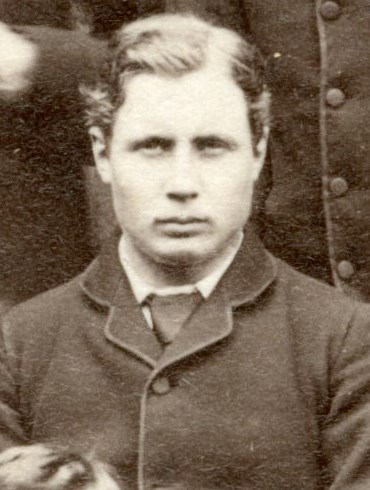
- Lived
- 1861–1947
- Place
- Cambridge and Harvard
In the first paragraph
An English mathematician who spent the first part of his career at Cambridge, where Bertrand Russell was his student. Together they wrote Principia Mathematica (1910–13), which tried to derive mathematics from logic. In 1924, at the age of 63, he moved to Harvard to teach philosophy, and there he wrote his major books on science, religion and metaphysics.
Religion as transforming truth. In Religion in the Making (1926), Whitehead defines a religion, on its doctrinal side, as a system of general truths that transform character when they are sincerely held and vividly apprehended. The definition joins two things often kept apart: religion makes claims that can be true or false, and those claims are meant to change the person who holds them. He also treats rational reflection as one of religion’s own stages of development, along with ritual, emotion and belief.
Science and its unexamined faith. In Science and the Modern World (1925), he argues that modern science began as a revolt against the rigid rationalism of the Middle Ages, and that it “has remained predominantly an anti-rationalistic movement, based upon a naive faith.” Science assumes that nature is orderly, but it does not justify that assumption.
Speculative philosophy. In Process and Reality (1929), he describes philosophy as “the endeavour to frame a coherent, logical, necessary system of general ideas in terms of which every element of our experience can be interpreted.” The important word is every: a philosophy that explains away religious experience has failed by this standard.
Misplaced concreteness. Whitehead warns against treating an abstraction as if it were the concrete reality it was drawn from. A map of a city is useful, but no one lives on the map.
Where they appear
Ethics: What do I do now? · 1. Religion and philosophy
Built by Umair Malik while studying Iqbal · Your Commentator