Chapter I · The Fourth Paragraph
4. Muslims and modern knowledge
Book pages 9–11
The fourth paragraph (pages 9–11) closes the introduction. It explains why the book is needed, how Muslims should approach European thought, and what the lectures will attempt.
The People
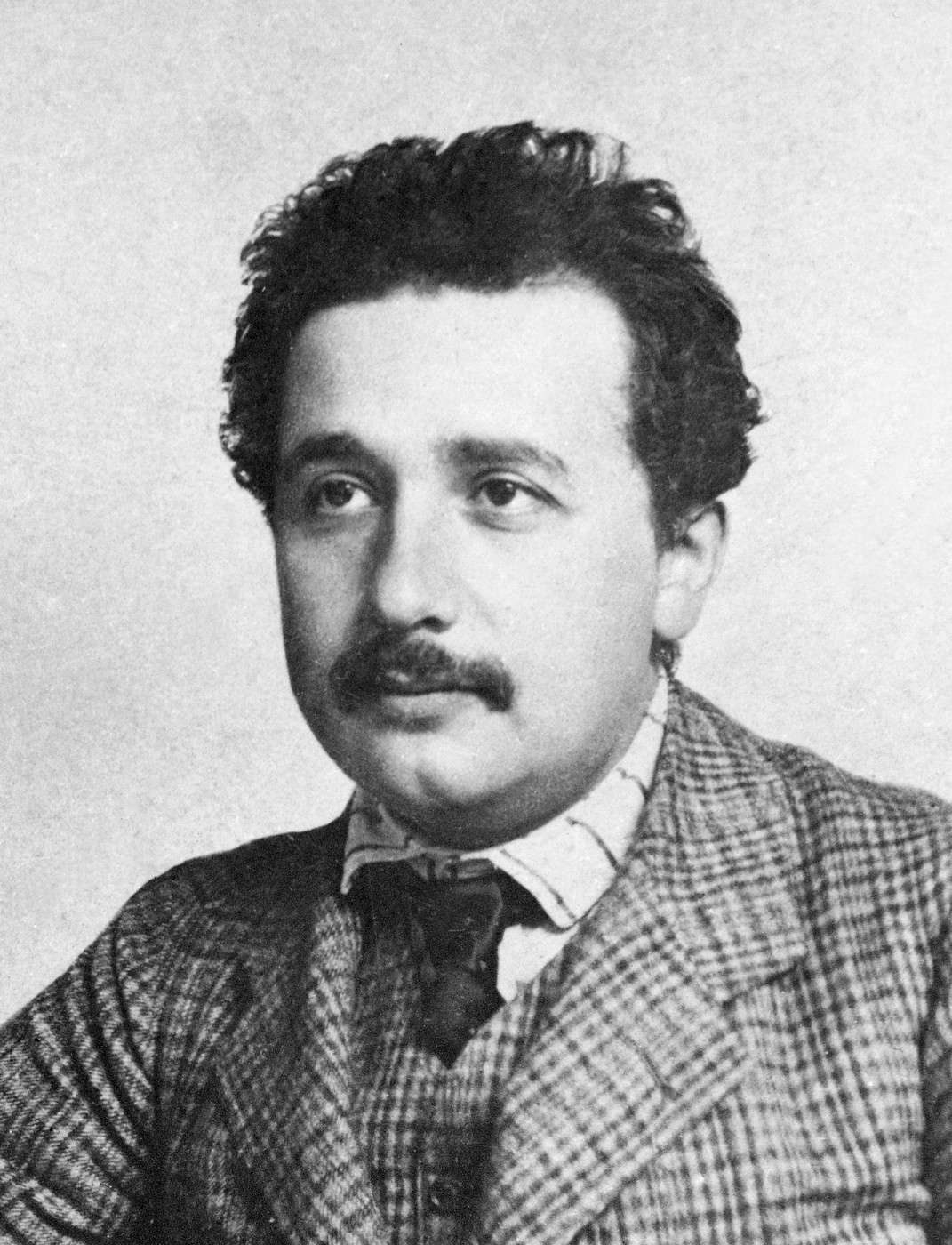
Albert Einstein (1879–1955)
His theories of relativity (1905 and 1915) showed that measurements of space and time depend on the observer. When these lectures were given, this was recent and widely discussed.
Mirza Abdul Qadir Bedil (1644–1720). A Persian-language poet of Mughal India, known for his difficult, philosophical style and widely read in Afghanistan and Central Asia. Iqbal admired him. Iqbal calls him “of Akbarabad,” although Bedil is usually associated with Azimabad (Patna) and Delhi.
Tawfik Fitrat, “the Turkish poet” (page 11). This identification is uncertain. The name resembles both Tevfik Fikret (1867–1915), an Ottoman poet, and Abdurauf Fitrat (1886–1938), a reformer from Bukhara who wrote about Bedil. Abdurauf Fitrat was still alive when the lectures were given, which does not fit Iqbal’s “died only a short time ago.”
The Background
Five hundred stationary years (page 9). Iqbal dates the stagnation from the end of the Middle Ages, “when the schools of Muslim theology were completed.”
Europe’s debt to Islam (pages 9–10). From the twelfth century, Arabic works were translated into Latin in centers such as Toledo and Sicily, carrying Greek learning together with Muslim advances in medicine, optics, mathematics and philosophy.
The political moment. These lectures were given in 1928–29, under European colonial rule across much of the Muslim world and only a few years after Turkey abolished the caliphate in 1924.
Anti-religious propaganda in Central Asia (pages 10–11). The Soviet state campaigned against religion in the 1920s, including in Muslim Central Asia, just across “the Indian frontier.”
The Ideas
Dazzling exterior and true inwardness (page 10). European culture’s surface achievements and power, as opposed to the intellectual effort underneath.
Time, space, and causality (page 10). The basic categories by which we make sense of anything, central to Kant. To say the intellect is “outgrowing” them is to say that modern science no longer fits the old framework.
The concept of intelligibility (page 10). What counts as making sense of something. This standard is itself changing.
Reconstruction (page 10). The word from the book’s title. It appears with the qualifier “if necessary,” next to “revision.”
Iqbal’s text
Read the paragraph now. The small numbers in the margin are the book’s page numbers.
9During the last five hundred years religious thought in Islam has been practically stationary. There was a time when European thought received inspiration from the world of Islam. The most remarkable phenomenon of modern history, 10however, is the enormous rapidity with which the world of Islam is spiritually moving towards the West. There is nothing wrong in this movement, for European culture, on its intellectual side, is only a further development of some of the most important phases of the culture of Islam. Our only fear is that the dazzling exterior of European culture may arrest our movement and we may fail to reach the true inwardness of that culture. During all the centuries of our intellectual stupor Europe has been seriously thinking on the great problems in which the philosophers and scientists of Islam were so keenly interested. Since the Middle Ages, when the schools of Muslim theology were completed, infinite advance has taken place in the domain of human thought and experience. The extension of man's power over nature has given him a new faith and a fresh sense of superiority over the forces that constitute his environment. New points of view have been suggested, old problems have been restated in the light of fresh experience, and new problems have arisen. It seems as if the intellect of man is outgrowing its own most fundamental categories — time, space, and causality. With the advance of scientific thought even our concept of intelligibility is undergoing a change. The theory of Einstein has brought a new vision of the universe and suggests new ways of looking at the problems common to both religion and philosophy. No wonder then that the younger generation of Islam in Asia and Africa demand a fresh orientation of their faith. With the reawakening of Islam, therefore, it is necessary to examine, in an independent spirit, what Europe has thought and how far the conclusions reached by her can help us in the revision and, if necessary, reconstruction, of theological thought in Islam. Besides this it is not possible to ignore the generally anti-religious and especially anti-Islamic propaganda in Central Asia 11which has already crossed the Indian frontier. Some of the apostles of this movement are born Muslims, and one of them, Tawfik Fitrat, the Turkish poet, who died only a short time ago, has gone to the extent of using our great poet-thinker, Mirza Abdul Qadir Bedil of Akbarabad, for the purposes of this movement. Surely, it is high time to look to the essentials of Islam. In these lectures I propose to undertake a philosophical discussion of some of the basic ideas of Islam, in the hope that this may, at least, be helpful towards a proper understanding of the meaning of Islam as a message to humanity. Also with a view to give a kind of ground-outline for further discussion, I propose, in this preliminary lecture, to consider the character of knowledge and religious experience.
How Iqbal Uses Them
He names the stagnation. Religious thought in Islam has been “practically stationary” for five hundred years, while Europe has kept thinking about the problems Muslim thinkers once pursued.
He presents Europe as a returning inheritance. Muslims moving toward the West are doing nothing wrong, because European culture, on its intellectual side, develops phases of Islamic culture. This removes the charge that learning from Europe is a betrayal.
He sets a condition. The danger is the “dazzling exterior.” Muslims must examine European thought “in an independent spirit,” and judge how far it can actually help.
He treats modern science as an opening. Einstein and the changing categories of time, space and causality are not a threat here. They show that the questions religion and philosophy share are open again.
He explains why now. The younger generation demands “a fresh orientation,” and anti-religious propaganda has reached India’s frontier. His answer is to “look to the essentials of Islam” through philosophical discussion, beginning with the character of knowledge and religious experience.