Chapter I · The Ninth Paragraph
9. Psychology and the mystic state
Book pages 28–31
This passage (pages 28–31) answers the objection that mystic experience is only a product of the body or of hidden impulses.
The People
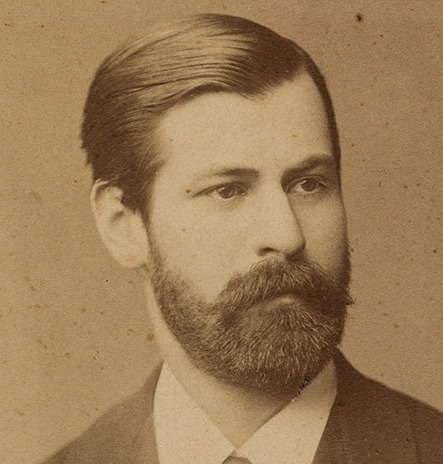
Sigmund Freud (1856–1939)
Austrian founder of psychoanalysis. He held that impulses pushed out of awareness live on in the unconscious and shape dreams, slips and neurotic symptoms. In The Future of an Illusion (1927), published shortly before these lectures, he treated religion as an illusion born of human wishes.
The Ideas
Organic conditions (page 28). The bodily states that accompany a mental state. Iqbal grants, for the sake of argument, that every mental state has them. His reply is that this is equally true of science, so it cannot be used against religion alone.
Origin and value (pages 28–29). How a state came about is one question, and whether it is true or valuable is another. Logicians later named the confusion of the two the “genetic fallacy.”
Repression (page 30). Responses harden into a habitual system. Impulses that do not fit are rejected and sink into the “unconscious region,” from which they return. Iqbal replies that their occasional outbreaks show a temporary disruption of habit rather than a permanent presence in the mind.
Iqbal’s text
Read the paragraph now. The small numbers in the margin are the book’s page numbers.
28For the purposes of knowledge, then, the region of mystic experience is as real as any other region of human experience and cannot be ignored merely because it cannot be traced back to sense-perception. Nor is it possible to undo the spiritual value of the mystic state by specifying the organic conditions which appear to determine it. Even if the postulate of modern psychology as to the inter-relation of body and mind is assumed to be true, it is illogical to discredit the value of the mystic state as a revelation of truth. Psychologically speaking, all states, whether their content is religious or non-religious, are organically determined. The scientific form of mind is as much organically determined as the religious. Our judgement as to the creations of genius is not at all determined or even remotely affected by what our psychologists may say regarding its organic conditions. A certain kind of temperament may be a necessary condition for a certain kind of receptivity; but the antecedent condition cannot be regarded as the whole truth about the character of what is received. The truth is that the organic causation of our mental states has nothing to do with the criteria by 29which we judge them to be superior or inferior in point of value. 'Among the visions and messages,' says Professor William James, 'some have always been too patently silly, among the trances and convulsive seizures some have been too fruitless for conduct and character to pass themselves off as significant, still less as Divine. In the history of Christian mysticism the problem how to discriminate between such messages and experiences as were really Divine miracles, and such others as the demon in his malice was able to counterfeit, thus making the religious person twofold more the child of hell he was before, has always been a difficult one to solve, needing all the sagacity and experience of the best directors of conscience. In the end it had come to our empiricist criterion: 'by their fruits ye shall know them and not by their roots.' The problem of Christian mysticism alluded to by Professor James has been in fact the problem of all mysticism. The demon in his malice does counterfeit experiences which creep into the circuit of the mystic state. As we read in the Quran:
'We have not sent any Apostle or Prophet before thee among whose desires Satan injected not some wrong desire, but God shall bring to naught that which Satan had suggested. Thus shall God affirm His revelations, for God is Knowing and Wise.' (22:52)
And it is in the elimination of the satanic from the Divine that the followers of Freud have done inestimable service to religion; though I cannot help saying that the main theory of this newer psychology does not appear to me to be supported by any adequate evidence. If our vagrant impulses assert themselves in our dreams, or at other times we are 30not strictly ourselves, it does not follow that they remain imprisoned in a kind of lumber room behind the normal self. The occasional invasion of these suppressed impulses on the region of our normal self tends more to show the temporary disruption of our habitual system of response rather than their perpetual presence in some dark corner of the mind. However, the theory is briefly this. During the process of our adjustment to our environment we are exposed to all sorts of stimuli. Our habitual responses to these stimuli gradually fall into a relatively fixed system, constantly growing in complexity by absorbing some and rejecting other impulses which do not fit in with our permanent system of responses. The rejected impulses recede into what is called the 'unconscious region' of the mind, and there wait for a suitable opportunity to assert themselves and take their revenge on the focal self. They may disturb our plans of action, distort our thought, build our dreams and phantasies, or carry us back to forms of primitive behaviour which the evolutionary process has left far behind. Religion, it is said, is a pure fiction created by these repudiated impulses of mankind with a view to find a kind of fairyland for free unobstructed movement. Religious beliefs and dogmas, according to the theory, are no more than merely primitive theories of Nature, whereby mankind have tried to redeem Reality from its elemental ugliness and to show it off as something nearer to the heart's desire than the facts of life would warrant. That there are religions and forms of art, which provide a kind of cowardly escape from the facts of life, I do not deny. All that I contend is that this is not true of all religions. No doubt, religious beliefs and dogmas have a metaphysical significance; but it is obvious that they are not interpretations of those data of experience which are the subject of the 31sciences of Nature. Religion is not physics or chemistry seeking an explanation of nature in terms of causation; it really aims at interpreting a totally different region of human experience — religious experience — the data of which cannot be reduced to the data of any other science. In fact, it must be said in justice to religion that it insisted on the necessity of concrete experience in religious life long before science learnt to do so. The conflict between the two is due not to the fact that the one is, and the other is not, based on concrete experience. Both seek concrete experience as a point of departure. Their conflict is due to the misapprehension that both interpret the same data of experience. We forget that religion aims at reaching the real significance of a special variety of human experience.
How Iqbal Uses Them
He turns the bodily argument around. “The scientific form of mind is as much organically determined as the religious.” If bodily causes discredited religion, they would discredit science as well.
He adopts James’s test. “The organic causation of our mental states has nothing to do with the criteria by which we judge them.” James supplies the criterion, adapting a saying of Jesus (Matthew 7:16): fruits, not roots.
He gives Freud partial credit. The Quran itself says that Satan injects wrong desires (22:52), so clearing out false experience is a real service. Iqbal credits Freud’s followers with this, and then says the main theory is not “supported by any adequate evidence.”
He redraws the border with science. Religion “is not physics or chemistry.” The conflict is due to “the misapprehension that both interpret the same data of experience.” This also corrects the Freudian claim that religion is a primitive theory of nature.