Chapter I · The Tenth Paragraph
10. Religion and the sex-impulse
Book pages 31–32
This short passage (pages 31–32) answers a second attempt to explain religion away, by reducing it to sexuality.
The People
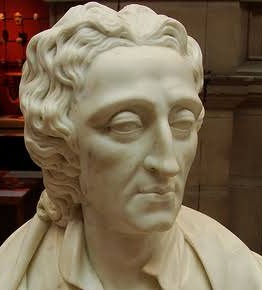
John Locke (1632–1704)
English philosopher and author of An Essay Concerning Human Understanding (1689). He argued that all our ideas come from experience, through the senses and through reflection on our own minds.
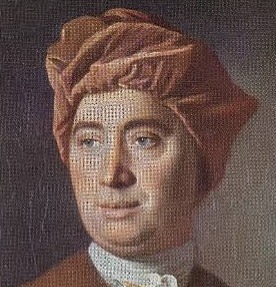
David Hume (1711–1776)
Scottish philosopher who pushed Locke’s method further. He traced our belief in cause and effect to habit, and he found no self beyond a bundle of perceptions. The Natural History of Religion (1757) explained religion by human hopes and fears.
The Ideas
The sexual theory of religion (page 31). The view, current in the psychology of Iqbal’s time, that religious feeling is sexual feeling in disguise. Freud’s thought gave it wide attention.
The air-cells (page 32). Hocking’s image. A person who takes a deep breath uses parts of the lungs that were lying idle, and this does not mean the person has stopped breathing the outside air. So too, a vision may draw on subconscious readiness and still come from beyond the self.
Iqbal’s text
Read the paragraph now. The small numbers in the margin are the book’s page numbers.
31Nor is it possible to explain away the content of religious consciousness by attributing the whole thing to the working of the sex-impulse. The two forms of consciousness — sexual and religious — are often hostile or, at any rate, completely different to each other in point of their character, their aim, and the kind of conduct they generate. The truth is that in a state of religious passion we know a factual reality in some sense outside the narrow circuit of our personality. To the psychologist religious passion necessarily appears as the work of the subconscious because of the intensity with which it shakes up the depths of our being. In all knowledge there is an element of passion, and the object of knowledge gains or loses in objectivity with the rise and fall in the intensity of passion. That is most real to us which stirs up the entire fabric of our personality. As Professor Hocking pointedly puts it: 'If ever upon the stupid day-length time-span of any self or saint either, some vision breaks to roll his life and ours into new channels, it can only be because that vision admits into his soul some trooping invasion of the 32concrete fullness of eternity. Such vision doubtless means subconscious readiness and subconscious resonance too; but the expansion of the unused air-cells does not argue that we have ceased to breathe the outer air: the very opposite.' A purely psychological method, therefore, cannot explain religious passion as a form of knowledge. It is bound to fail in the case of our newer psychologists as it did fail in the case of Locke and Hume.
How Iqbal Uses Them
He answers the sexual theory by comparison. The two forms of consciousness differ in “their character, their aim, and the kind of conduct they generate.”
He accepts the psychologist’s observation and rejects the conclusion. Religious passion does shake “the depths of our being.” That is why it looks like the subconscious at work. In it, however, “we know a factual reality in some sense outside the narrow circuit of our personality.”
He makes passion a mark of reality. “That is most real to us which stirs up the entire fabric of our personality.”
He ranks the newer psychologists with Locke and Hume. He does not explain the comparison. One likely reading is that describing how ideas form in the mind cannot show whether what is known is true.