Chapter I · The Second Paragraph
2. The search for rational foundations
Book pages 5–7
The second paragraph (pages 5–7) surveys how Muslim thinkers searched for rational foundations, and why each major attempt fell short.
The People
The Prophet’s prayer (page 5). A prayer attributed to the Prophet and often quoted in Islamic philosophical and Sufi writing, usually as a request to see things as they truly are.
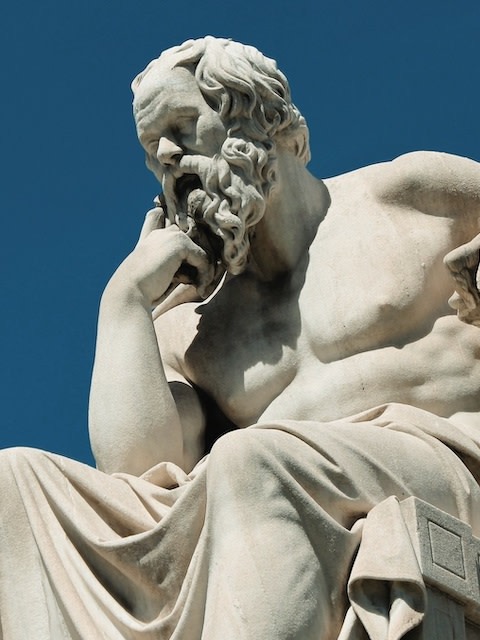
Socrates (c. 470–399 BCE)
Athenian philosopher, remembered for turning philosophy away from speculation about nature and toward human conduct. “The proper study of man” echoes a line from Alexander Pope’s Essay on Man.
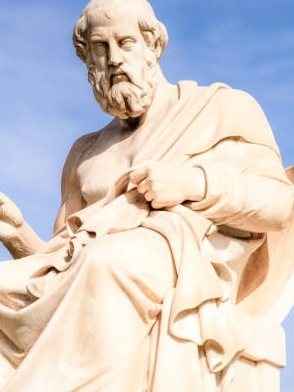
Plato (c. 428–348 BCE)
Socrates’ student. In the Republic, the changing world known by the senses yields only opinion (doxa), while real knowledge (episteme) concerns unchanging Forms.
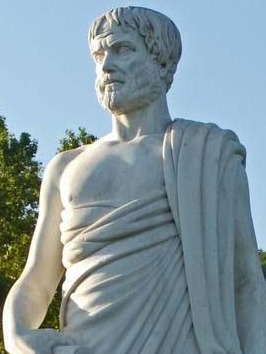
Aristotle (384–322 BCE)
Plato’s student, whose works dominated philosophy in the medieval Islamic world. He valued observation far more than Plato did. He matters here as the source of the Active Intellect.
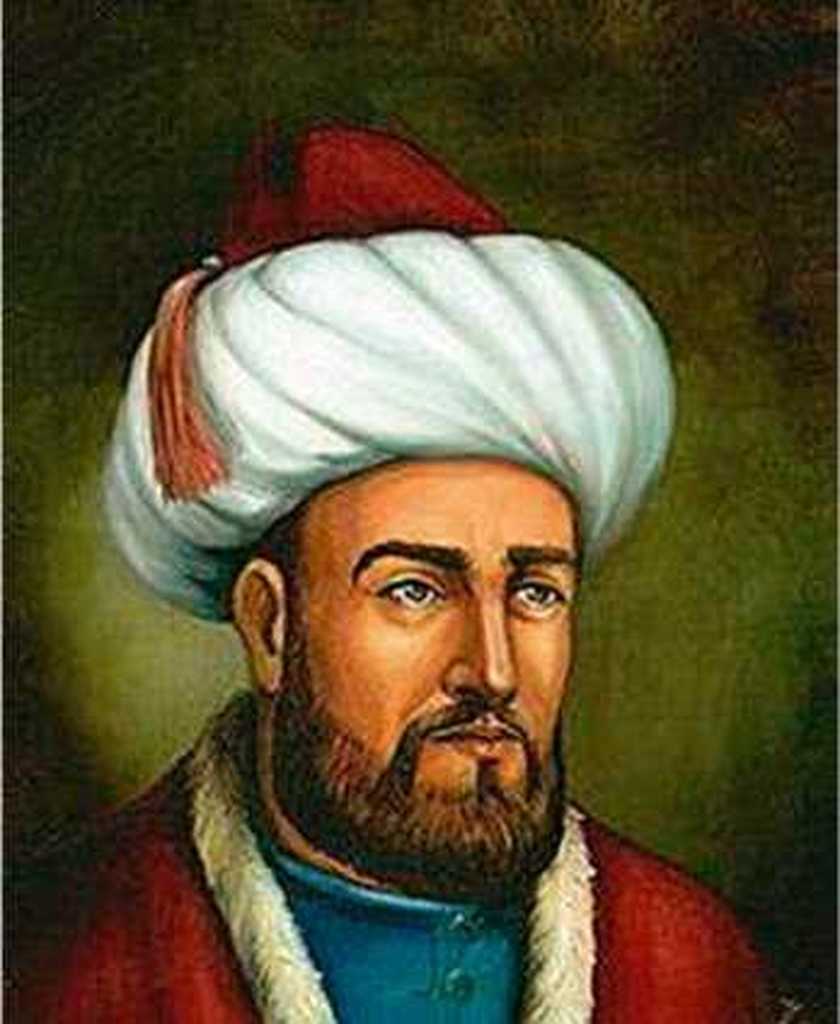
Ghazali (1058–1111)
Born in Tus, in Persia, Ghazali headed the Nizamiyya college in Baghdad from 1091. In 1095, he suffered a spiritual and physical collapse, reportedly losing the ability to speak or teach, and he left his post for about a decade of Sufi retreat and travel.
The attack on the philosophers. The Incoherence of the Philosophers uses the philosophers’ own logic to show that they cannot prove their claims about God and the universe. Ghazali names three of their positions as contrary to Islam: that the world is eternal, that God knows only universals, and that bodies are not resurrected.
Doubt and deliverance. In Deliverance from Error, he describes doubting the senses and then reason itself, until certainty returned as a light that God cast into his heart.
Knowing by tasting. He concluded that the Sufis possess what argument cannot give, and he called it dhawq, “tasting.” Reading a definition of drunkenness is very different from being drunk.
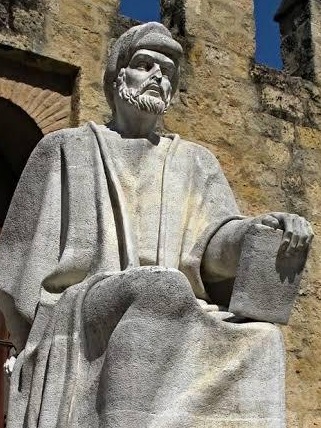
Ibn Rushd (Averroes, 1126–1198)
Born in Córdoba, in Muslim Spain, Ibn Rushd served as a judge and court physician and wrote commentaries on nearly all of Aristotle’s works. Medieval Latin writers called him simply “the Commentator.” He was born after Ghazali died, so they opposed each other through their books.
The reply to Ghazali. The Incoherence of the Incoherence answers Ghazali point by point, arguing that he had attacked a distorted version of philosophy.
Philosophy as a religious duty. The Decisive Treatise argues that the Quran commands reflection on creation, so those capable of philosophy are obliged to pursue it.
The unity of the intellect. Aristotle’s De Anima briefly describes an active intellect, which alone is immortal. Ibn Rushd developed this into his most controversial view: intellect is single and shared by all human beings, so what is eternal in human thought does not belong to any one person.
Influence in Europe. Latin Averroists taught his ideas at Paris, and the tradition later flourished at Padua. Thomas Aquinas wrote against the doctrine in 1270, and the Bishop of Paris condemned related teachings in 1270 and 1277.
The Schools
The Mutazila. A rationalist school of theology that flourished from the eighth to the tenth centuries. They held that reason can establish truths about God and morality. The “purely negative attitude” on page 7 may refer to their tendency to define God by denying attributes of him.
The Ash‘arites. The school founded by al-Ash‘ari (d. 936), a former Mutazili who turned against that school. They used rational argument to defend traditional belief, and they became the dominant theology of Sunni Islam.
The Ideas
Scholastic theology (page 6). Known in Islam as kalam: the use of reasoned argument to explain and defend religious belief.
The Quran’s observation of nature (page 6). The images here draw on specific verses, including the bee receiving inspiration (16:68), the winds, clouds, and alternation of day and night (2:164), and the heavenly bodies floating in their orbits (21:33, 36:40). Hearing and sight are named as gifts (16:78) and as accountable (17:36).
Anti-classical spirit (page 6). The claim that Greek thought prized the abstract and unchanging, while the Quran directs attention to concrete, changing experience.
Philosophical scepticism (page 6). The view that reason cannot establish certain knowledge.
The human ego (page 7). Iqbal’s term for the individual self. Its value and destiny become one of the main subjects of the book.
Idealism (page 7). The family of modern philosophies that hold reality to be fundamentally mental or dependent on mind.
Greek Dialectic (page 7). The art of arguing from accepted premises to defeat an opponent.
Non-conceptual modes of approaching Reality (page 7). Ways of knowing that do not work through abstract concepts. This connects to intuition in the first paragraph.
Iqbal’s text
Read the paragraph now. The small numbers in the margin are the book’s page numbers.
5The search for rational foundations in Islam may be regarded to have begun with the Prophet himself. His constant prayer was: 'God! grant me knowledge of the ultimate nature of things!' The work of later mystics and non-mystic rationalists forms an exceedingly instructive chapter in the history of our culture, inasmuch as it reveals a longing for a coherent system of ideas, a spirit of whole-hearted devotion to truth, as well as the limitations of the age, which rendered the various theological movements in Islam less fruitful than they might have been in a different age. As we all know, Greek philosophy has been a great cultural force in the history of Islam. Yet a careful study of 6the Quran and the various schools of scholastic theology that arose under the inspiration of Greek thought disclose the remarkable fact that while Greek philosophy very much broadened the outlook of Muslim thinkers, it, on the whole, obscured their vision of the Quran. Socrates concentrated his attention on the human world alone. To him the proper study of man was man and not the world of plants, insects, and stars. How unlike the spirit of the Quran, which sees in the humble bee a recipient of Divine inspiration and constantly calls upon the reader to observe the perpetual change of the winds, the alternation of day and night, the clouds, the starry heavens, and the planets swimming through infinite space! As a true disciple of Socrates, Plato despised sense-perception which, in his view, yielded mere opinion and no real knowledge. How unlike the Quran, which regards 'hearing' and 'sight' as the most valuable Divine gifts and declares them to be accountable to God for their activity in this world. This is what the earlier Muslim students of the Quran completely missed under the spell of classical speculation. They read the Quran in the light of Greek thought. It took them over 200 years to perceive — though not quite clearly — that the spirit of the Quran was essentially anti-classical, and the result of this perception was a kind of intellectual revolt, the full significance of which has not been realized even up to the present day. It was partly owing to this revolt and partly to his personal history that Ghazali based religion on philosophical scepticism — a rather unsafe basis for religion and not wholly justified by the spirit of the Quran. Ghazali's chief opponent, Ibn Rushd, who defended Greek philosophy against the rebels, was led, through Aristotle, to what is known as the doctrine of Immortality of Active Intellect, a doctrine which once wielded enormous influence 7on the intellectual life of France and Italy, but which, to my mind, is entirely opposed to the view that the Quran takes of the value and destiny of the human ego. Thus Ibn Rushd lost sight of a great and fruitful idea in Islam and unwittingly helped the growth of that enervating philosophy of life which obscures man's vision of himself, his God, and his world. The more constructive among the Ash‘arite thinkers were no doubt on the right path and anticipated some of the more modern forms of Idealism; yet, on the whole, the object of the Ash‘arite movement was simply to defend orthodox opinion with the weapons of Greek Dialectic. The Mutazila, conceiving religion merely as a body of doctrine and ignoring it as a vital fact, took no notice of non-conceptual modes of approaching Reality and reduced religion to a mere system of logical concepts ending in a purely negative attitude. They failed to see that in the domain of knowledge — scientific or religious — complete independence of thought from concrete experience is not possible.
How Iqbal Uses Them
He gives the search an Islamic origin. The first paragraph argued that religion needs rational foundations. The Prophet’s prayer now shows that this need is not new and was not imported from Greece. Later mystics and rationalists shared the same longing, limited by their age.
He weighs Greece’s gift against its cost. Greek philosophy broadened Muslim thinkers’ outlook but obscured their vision of the Quran. Socrates’ focus on the human world is set against a Quran that points to the bee, the winds and the planets. Plato’s distrust of the senses is set against a Quran that treats hearing and sight as gifts to answer for. These are broad contrasts, and they serve to present the Quran as a champion of concrete experience. Aristotle’s own empirical work goes unmentioned.
He treats the revolt as unfinished. It took over 200 years for Muslims to see the Quran’s anti-classical spirit, and even then not quite clearly. Iqbal says the significance of that revolt has still not been realized.
He finds every response wanting. Ghazali turned against reason and rested religion on scepticism, a “rather unsafe basis.” Ibn Rushd, following Aristotle, arrived at a shared immortal intellect that leaves no lasting destiny for the individual self. The Ash‘arites were on the right path, but mainly defended orthodoxy with Greek tools. The Mutazila treated religion as doctrine alone, and reduced it to logical concepts.
He connects the failures to the first paragraph. There, thought and intuition complete each other. Here, the Mutazila keep thought and ignore non-conceptual knowing, while Ghazali turns to experience after giving up on thought. Each holds half of what the first paragraph says belongs together.