Chapter I · The Eighth Paragraph
8. Inner experience as knowledge
Book pages 19–28
This long passage (pages 19–28) is the center of the chapter. It argues that inner experience is a real source of knowledge, and it sets out five features of mystic experience.
The People
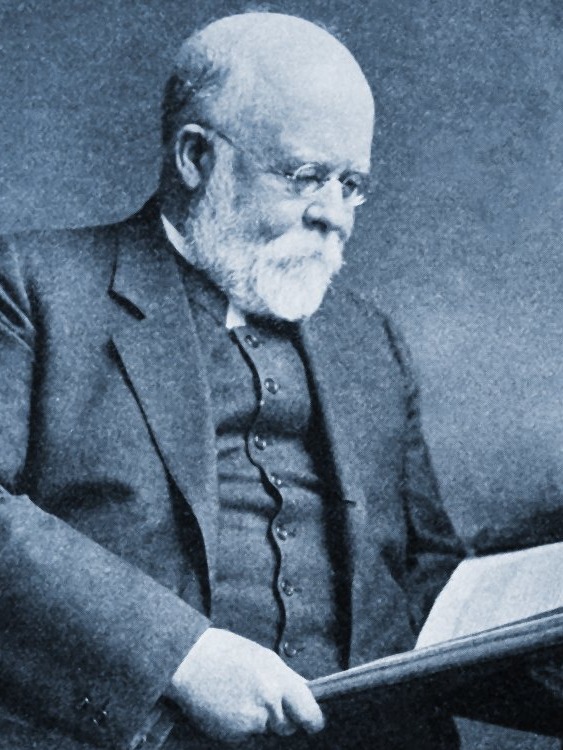
Duncan Black Macdonald (1863–1943)
Scottish-born scholar of Islam who taught at Hartford Theological Seminary in the United States. Iqbal criticizes him for treating the Ibn Sayyad story as humorous, and quotes him approvingly on Ibn Khaldun.
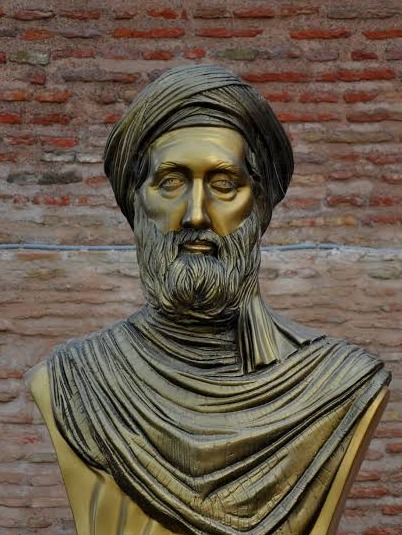
Ibn Khaldun (1332–1406)
North African historian and author of the Muqaddimah. Iqbal credits him as the first Muslim to see the value of the Prophet’s critical attitude.
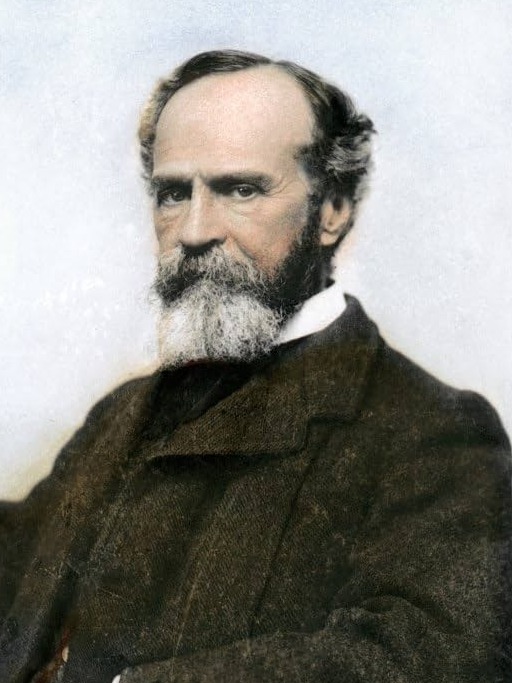
William James (1842–1910)
American philosopher and psychologist. The Varieties of Religious Experience (1902) treated religious experience as something to study seriously. His four marks of mystical states are ineffability, noetic quality (the sense of gaining knowledge), transiency and passivity.
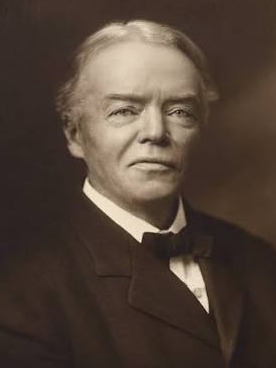
Josiah Royce (1855–1916)
American idealist philosopher at Harvard. Iqbal borrows his view that we know other people are real because they respond to our signals.
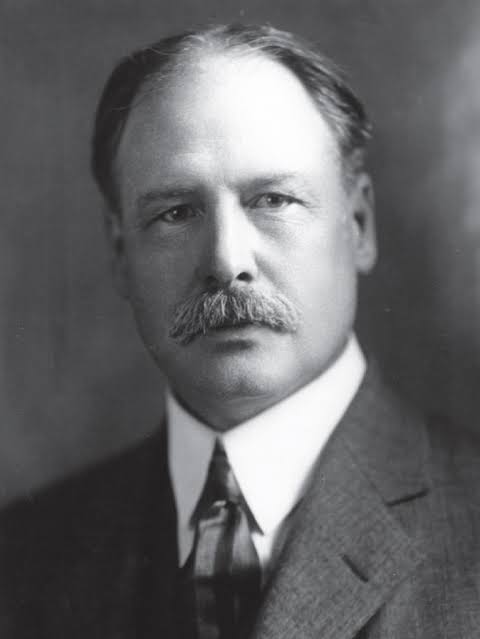
William Ernest Hocking (1873–1966)
American philosopher at Harvard and author of The Meaning of God in Human Experience (1912). The long quotation on pages 26–27 argues that feeling always reaches toward an object.
Bukhari (810–870) and Ibn Sayyad. Bukhari compiled the most respected collection of hadith. Ibn Sayyad was a youth in Medina, known for ecstatic states, whom the Prophet observed and questioned.
The Background
The Society for Psychical Research (page 22). Founded in London in 1882 to investigate telepathy, trance and similar phenomena by scientific methods. James was closely involved.
Subliminal selves (page 22). The idea, associated with F. W. H. Myers, that consciousness extends below the threshold of ordinary awareness.
Verbal revelation (page 27). A long dispute in Muslim theology over whether revelation came in actual words, tied to the question of whether the Quran is created.
The Ideas
Two ways of connecting with Reality (page 19). An indirect way, through observing its symbols as they appear to the senses, and a direct way, through association with it within.
The naturalism of the Quran (pages 19–20). Its attention to nature recognizes that humans are related to nature. Control of nature must serve “a free upward movement of spiritual life.”
Fuad or Qalb (page 20). The heart, which Iqbal calls “a kind of inner intuition or insight.” It is no special mysterious faculty, and it “sees.”
Interpretation (pages 20–21). Experience yields knowledge only when it is interpreted. What we call “Nature” itself emerged through interpretation.
Other minds (page 24). We have no sense for perceiving other minds, and yet we feel sure of them. Iqbal offers this as a parallel to the experience of God, and he explicitly says it is not a proof.
Feeling and idea (pages 26–27). Mystic experience is closer to feeling, but feeling has a cognitive element and seeks expression in thought.
The five features and James
Iqbal’s list closely follows James’s four marks, although he does not present it that way. This comparison is an interpretation.
| Iqbal’s feature | Closest mark in James |
|---|---|
| 1. Immediacy, like other experience | Noetic quality |
| 2. An unanalysable whole | None. Iqbal corrects James here |
| 3. Contact with a unique other Self | Passivity |
| 4. Cannot be communicated | Ineffability |
| 5. Does not break with serial time | Transiency |
Iqbal’s text
Read the paragraph now. The small numbers in the margin are the book’s page numbers.
19There is no doubt that the treatment of religious experience, as a source of Divine knowledge, is historically prior to the treatment of other regions of human experience for the same purpose. The Quran, recognizing that the empirical attitude is an indispensable stage in the spiritual life of humanity, attaches equal importance to all the regions of human experience as yielding knowledge of the ultimate Reality which reveals its symbols both within and without. One indirect way of establishing connexions with the reality that confronts us is reflective observation and control of its symbols as they reveal themselves to sense-perception; the other way is direct association with that reality as it reveals itself within. The naturalism of the Quran is only 20a recognition of the fact that man is related to nature, and this relation, in view of its possibility as a means of controlling her forces, must be exploited in the interests, not of un-righteous desire for domination, but in the nobler interest of a free upward movement of spiritual life. In the interests of securing a complete vision of Reality, therefore, sense-perception must be supplemented by the perception of what the Quran describes as Fuad or Qalb, i.e. heart:
'God hath made everything which He hath created most good; and began the creation of man with clay; then ordained his progeny from germs of life, from sorry water; then shaped him, and breathed of His spirit unto him, and gave you hearing and seeing and heart: what little thanks do ye return?' (32:7-9)
The 'heart' is a kind of inner intuition or insight which, in the beautiful words of Rumi, feeds on the rays of the sun and brings us into contact with aspects of Reality other than those open to sense-perception. It is, according to the Quran, something which 'sees', and its reports, if properly interpreted, are never false. We must not however, regard it as a mysterious special faculty; it is rather a mode of dealing with Reality in which sensation, in the physiological sense of the word, does not play any part. Yet the vista of experience thus opened to us is as real and concrete as any other experience. To describe it as psychic, mystical, or supernatural does not detract from its value as experience. To the primitive man all experience was supernatural. Prompted by the immediate necessities of life he was driven to interpret his experience, and out of this interpretation gradually emerged 'Nature' in our sense of the word. The 21total-Reality, which enters our awareness and appears on interpretation as an empirical fact, has other ways of invading our consciousness and offers further opportunities of interpretation. The revealed and mystic literature of mankind bears ample testimony to the fact that religious experience has been too enduring and dominant in the history of mankind to be rejected as mere illusion. There seems to be no reason, then, to accept the normal level of human experience as fact and reject its other levels as mystical and emotional. The facts of religious experience are facts among other facts of human experience and, in the capacity of yielding knowledge by interpretation, one fact is as good as another. Nor is there anything irreverent in critically examining this region of human experience. The Prophet of Islam was the first critical observer of psychic phenomena. Bukhari and other traditionists have given us a full account of his observation of the psychic Jewish youth, Ibn Sayyad, whose ecstatic moods attracted the Prophet's notice. He tested him, questioned him, and examined him in his various moods. Once he hid himself behind the stem of a tree to listen to his mutterings. The boy's mother, however, warned him of the approach of the Prophet. Thereupon the boy immediately shook off his mood and the Prophet remarked: 'If she had let him alone the thing would have been cleared up.' The Prophet's companions, some of whom were present during the course of this first psychological observation in the history of Islam, and even later traditionists, who took good care to record this important fact, entirely misunderstood the significance of his attitude and interpreted it in their own innocent manner. Professor Macdonald, who seems to have no idea of the fundamental psychological difference between the mystic and the prophetic consciousness, finds humour enough in 22this picture of one prophet trying to investigate another after the method of the Society for Psychical Research. A better appreciation of the spirit of the Quran which, as I will show in a subsequent lecture, initiated the cultural movement terminating in the birth of the modern empirical attitude, would have led the Professor to see something remarkably suggestive in the Prophet's observation of the psychic Jew. However, the first Muslim to see the meaning and value of the Prophet's attitude was Ibn Khaldun, who approached the content of mystic consciousness in a more critical spirit and very nearly reached the modern hypothesis of subliminal selves. As Professor Macdonald says, 'Ibn Khaldun had some most interesting psychological ideas and would probably have been in close sympathy with Mr. William James's 'The Varieties of Religious Experience.' Modern psychology has only recently begun to realize the importance of a careful study of the contents of mystic consciousness, and we are not yet in possession of a really effective scientific method to analyse the contents of non-rational modes of consciousness. With the time at my disposal it is not possible to undertake an extensive inquiry into the history and the various degrees of mystic consciousness in point of richness and vividness. All that I can do is to offer a few general observations only on the main characteristics of mystic experience.
1. The first point to note is the immediacy of this experience. In this respect it does not differ from other levels of human experience which supply data for knowledge. All experience is immediate. As regions of normal experience are subject to interpretation of sense-data for our knowledge of the external world, so the region of mystic experience is subject to interpretation for our knowledge of God. The immediacy of mystic experience simply means that we 23know God just as we know other objects. God is not a mathematical entity or a system of concepts mutually related to one another and having no reference to experience.
2. The second point is the unanalysable wholeness of mystic experience. When I experience the table before me innumerable data of experience merge into the single experience of the table. Out of this wealth of data I select those that fall into a certain order of space and time and round them off in reference to the table. In the mystic state, however vivid and rich it may be, thought is reduced to a minimum and such an analysis is not possible. But this difference of the mystic state from the ordinary rational consciousness does not mean discontinuance with the normal consciousness, as Professor William James erroneously thought. In either case it is the same Reality which is operating on us. The ordinary rational consciousness, in view of our practical need of adaptation to our environment, takes that Reality piecemeal, selecting successively isolated sets of stimuli for response. The mystic state brings us into contact with the total passage of Reality in which all the diverse stimuli merge into one another and form a single unanalysable unity in which the ordinary distinction of subject and object does not exist.
3. The third point to note is that to the mystic the mystic state is a moment of intimate association with a unique other Self, transcending, encompassing, and momentarily suppressing the private personality of the subject of experience. Considering its content the mystic state is highly objective and cannot be regarded as a mere retirement into the mists of pure subjectivity. But you will ask me how immediate experience of God, as an Independent Other Self, is at all possible. The mere fact that the mystic state is passive does not finally prove the veritable 'otherness' 24of the Self experienced. This question arises in the mind because we assume, without criticism, that our knowledge of the external world through sense-perception is the type of all knowledge. If this were so, we could never be sure of the reality of our own self. However, in reply to it I suggest the analogy of our daily social experience. How do we know other minds in our social intercourse? It is obvious that we know our own self and nature by inner reflection and sense-perception respectively. We possess no sense for the experience of other minds. The only ground of my knowledge of a conscious being before me is the physical movements similar to my own from which I infer the presence of another conscious being. Or we may say, after Professor Royce, that our fellows are known to be real because they respond to our signals and thus constantly supply the necessary supplement to our own fragmentary meanings. Response is, no doubt, the test of the presence of a conscious-self, and the Quran also takes the same view:
'And your Lord saith, call me and I respond to your call.' (40:60)
'And when My servants ask thee concerning Me, then I am nigh unto them and answer the cry of him that crieth unto me.' (2:186)
It is clear that whether we apply the physical criterion or the non-physical and more adequate criterion of Royce, in either case our knowledge of other minds remains something like inferential only. Yet we feel that our experience of other minds is immediate and never entertain any doubt as to the reality of our social experience. I do not, however, mean, at the present stage of our inquiry, to build on the 25implications of our knowledge of other minds, an idealistic argument in favour of the reality of a comprehensive self. All that I mean to suggest is that the immediacy of our experience in the mystic state is not without a parallel. It has some sort of resemblance to our normal experience and probably belongs to the same category.
4. Since the quality of mystic experience is to be directly experienced, it is obvious that it cannot be communicated. Mystic states are more like feeling than thought. The interpretation which the mystic or the prophet puts on the content of his religious consciousness can be conveyed to others in the form of propositions, but the content itself cannot be so transmitted. Thus in the following verses of the Quran it is the psychology and not the content of the experience that is given:
'It is not for man that God should speak with him, but by vision or from behind a veil: or He sendeth a messenger to reveal by His permission what He will: for He is Exalted, Wise.' (42:51)
'By the star when it setteth, your compatriot erreth not, nor is he led astray. Neither speaketh he from mere impulse. The Quran is no other than the revelation revealed to him: One strong in power taught it him, endowed with wisdom. With even balance stood he In the highest part of the horizon: Then came he nearer and approached, And was at the distance of two bows or even closer — And he revealed to the servant of God what he 26revealed: His heart falsified not what he saw: What! will ye then dispute with him as to what he saw? He had seen him also another time Near the Sidrah tree which marks the boundary: Near which is the garden of repose: When the Sidrah tree was covered with what covered it: His eye turned not aside, nor did it wander: For he saw the greatest of the signs of the Lord.' (53:1-18)
The incommunicability of mystic experience is due to the fact that it is essentially a matter of inarticulate feeling, untouched by discursive intellect. It must, however, be noted that mystic feeling, like all feeling, has a cognitive element also; and it is, I believe, because of this cognitive element that it lends itself to the form of idea. In fact, it is the nature of feeling to seek expression in thought. It would seem that the two — feeling and idea — are the non-temporal and temporal aspects of the same unit of inner experience. But on this point I cannot do better than quote Professor Hocking who has made a remarkably keen study of feeling in justification of an intellectual view of the content of religious consciousness: 'What is that other-than-feeling in which feeling may end? I answer, consciousness of an object. Feeling is instability of an entire conscious self: and that which will restore the stability of this self lies not within its own border, but beyond it. Feeling is outward-pushing, as idea is outward-reporting: and no feeling is so blind as to have no idea of its own object. As a feeling possesses the mind, there also possesses the mind, as an integral part of 27that feeling, some idea of the kind of thing which will bring it to rest. A feeling without a direction is as impossible as an activity without a direction: and a direction implies some objective. There are vague states of consciousness in which we seem to be wholly without direction; but in such cases it is remarkable that feeling is likewise in abeyance For example, I may be dazed by a blow, neither realizing what has happened, nor suffering any pain, and yet quite conscious that something has occurred: the experience waits an instant in the vestibule of consciousness, not as feeling but purely as fact, until idea has touched it and defined a course of response. At the same moment, it is felt as painful. If we are right, feeling is quite as much an objective consciousness as is idea: it refers always to something beyond the present self and has no existence save in directing the self towards that subject in whose presence its own career must end!' Thus you will see that it is because of this essential nature of feeling that while religion starts with feeling, it has never, in its history, taken itself as a matter of feeling alone and has constantly striven after metaphysics. The mystic's condemnation of intellect as an organ of knowledge does not really find any justification in the history of religion. But Professor Hocking's passage just quoted has a wider scope than mere justification of idea in religion. The organic relation of feeling and idea throws light on the old theological controversy about verbal revelation which once gave so much trouble to Muslim religious thinkers. Inarticulate feeling seeks to fulfil its destiny in idea which, in its turn, tends to develop out of itself its own visible garment. It is no mere metaphor to say that idea and word both simultaneously emerge out of the womb of feeling, though logical understanding cannot but take them in a temporal order and thus create its own 28difficulty by regarding them as mutually isolated. There is a sense in which the word is also revealed.
5. The mystic's intimate association with the eternal which gives him a sense of the unreality of serial time does not mean a complete break with serial time. The mystic state in respect of its uniqueness remains in some way related to common experience. This is clear from the fact that the mystic state soon fades away, though it leaves a deep sense of authority after it has passed away. Both the mystic and the prophet return to the normal levels of experience; but with this difference that the return of the prophet, as I will show later, may be fraught with infinite meaning for mankind.
How Iqbal Uses Them
He places inner experience beside the senses. The Quran’s naturalism is one side. The heart supplies the other, so that a “complete vision of Reality” needs both.
He makes religious experience a fact. Its endurance in history means it cannot be dismissed as illusion, and “one fact is as good as another” in yielding knowledge by interpretation.
He claims critical inquiry for Islam. The Prophet’s observation of Ibn Sayyad becomes a precedent for psychology. Iqbal rebukes Macdonald for missing this and credits Ibn Khaldun for seeing it.
He guards each feature against a misreading. Immediacy does not put mystic experience beyond interpretation. Its wholeness does not cut it off from normal consciousness. Passivity alone does not prove another Self, so he turns to our knowledge of other minds, while saying he is not building an argument on it.
He uses Hocking to return to thought. If feeling always reaches toward idea, then “the mystic’s condemnation of intellect” is unjustified. This is the claim of the first and third paragraphs, approached from the side of feeling.
He prepares the next step. Mystic and prophet both return to ordinary life, and the prophet’s return “may be fraught with infinite meaning for mankind.”